Ⅰ
Bodnant Garden - National Trust
From formal order to picturesque atmosphere
Gardens are not merely ornamental settings. Historically, they have functioned as cultural instruments through which societies projected ideas of power, taste, order, nature, and the proper relationship between the human subject and the landscape.
In continental Europe, the French formal garden established one of the most influential models of designed nature. Its spatial language privileged axial composition, symmetry, controlled vegetation, and the legible organization of views. It made landscape appear disciplined, theatrical, and politically composed.
In Britain, the English landscape garden emerged partly in reaction to that rigidity. Rather than emphasizing strict geometry, it cultivated scenic sequence, winding movement, irregular planting, and a carefully designed appearance of natural freedom. It proposed not domination over nature, but an idealized countryside to be experienced emotionally through movement.
These two traditions are especially relevant to compare because they represent not only different aesthetic styles, but different environmental imaginaries. One privileges control and legibility; the other stages atmosphere, discovery, and picturesque unfolding.

Can historical garden cultures still be detected in contemporary public feeling?
This project asks whether inherited garden traditions remain legible not only in spatial form, but also in the language visitors use to describe their experience today.
Rather than relying only on plans, archival texts, or visual comparison, the study turns to Google Maps reviews as a contemporary archive of everyday interpretation. These short texts register delight, comfort, surprise, trust, disappointment, and atmosphere in ordinary language.
The core proposition of the project is that landscape traditions may survive not only as formal design genealogies, but as affective regimes of perception. In other words, gardens can be studied not only as compositions of paths, vegetation, and artworks, but also as environments that generate recognizable emotional signatures.
Art gardens are particularly suitable for this comparison because they combine landscape design, curatorial framing, movement, and sensory expectation. Visitors do not only encounter nature in them; they encounter atmosphere, sequence, symbolism, and surprise.
The goal, therefore, is not to prove fixed national essences, but to explore whether historically distinct design cultures continue to resonate in public discourse.

Building an affective reading of gardens from public text
The project uses a lexicon-based NLP workflow. After collecting reviews for selected art gardens in France and the United Kingdom, the texts are cleaned, tokenized, and matched to eight emotional categories: anger, anticipation, disgust, fear, joy, sadness, surprise, and trust.
Each review contributes emotional signals that are then aggregated by site. This produces a comparable profile for each garden and makes it possible to compare emotional tendencies both at the level of individual locations and at the level of national groups.
This method does not claim to recover the full psychological depth of subjective experience. Rather, it offers a consistent comparative framework for tracing large-scale patterns in public emotional discourse.
The resulting dataset should therefore be read as evidence of how gardens are described and valued collectively, not as a direct measurement of internal emotional states.

The explicit layer of judgement

Beyond ratings: the vocabulary of feeling
Ratings show whether a place is broadly approved, but they flatten the texture of experience into a single score. Emotion analysis adds depth by revealing what kinds of feelings structure those positive or negative judgements.
A garden with a high rating may be associated with joy and surprise, suggesting delight and discovery. Another may be highly rated because it evokes trust, signaling comfort, care, legibility, and maintenance. Others may generate more ambivalent combinations.
The comparison between France and the United Kingdom is therefore meaningful not because it fixes two stable national identities, but because it reveals tendencies in how different landscape traditions may still be perceived and narrated.

Mapping the eight affective layers of visitor perception
The map below treats the dataset as an emotional atlas. As you scroll, each layer isolates one category, showing how the same gardens reappear within different affective geographies. This allows the project to move beyond ratings and read landscape as a field of public feeling.
Joy is used here as a proxy for delight, scenic pleasure, leisure satisfaction, and the immediate positive affect of the visit.
Trust can indicate comfort, care, safety, maintenance, and the sense that a garden is legible, welcoming, and well-held.
Surprise is especially important for gardens because it relates to scenic reveal, discovery, changing views, and encounters with unexpected artworks or spatial episodes.
Anticipation captures expectation and forward movement: the feeling that the landscape unfolds in sequence and promises something still to come.
Sadness does not necessarily imply failure. In gardens it can also correspond to contemplation, memory, quietness, weathered beauty, or reflective atmosphere.
Fear may indicate unease, insecurity, poor visibility, confusion, or other forms of spatial discomfort noted by visitors.
Disgust often points to maintenance issues, dirt, crowding, neglect, or negative reactions to the material condition of the place.
Anger usually reflects frustration: closures, restricted access, pricing, rules, disappointment, or unmet expectations rather than aesthetic experience alone.
At this layer, the map highlights where visitors most strongly register delight and immediate positive experience. In landscape terms, joy often corresponds to scenic richness, leisure quality, visual pleasure, and the simple success of the visit as an enjoyable outing.

From spatial form to emotional atmosphere
Taken together, the maps and charts suggest that garden traditions may persist not only in morphology, but in atmosphere. Some spaces appear to be described through delight, scenic richness, and surprise; others through reassurance, care, and composure.
These patterns should be interpreted cautiously. Public reviews are shaped by tourism, platform culture, weather, service conditions, crowding, and accessibility as much as by landscape form itself. Yet even with these limitations, the dataset offers a valuable lens into how environments are collectively experienced.
What emerges is not a rigid opposition between French and British gardens, but a field of emotional tendencies. The project therefore invites a broader methodological claim: digital public language can serve as material for landscape interpretation.
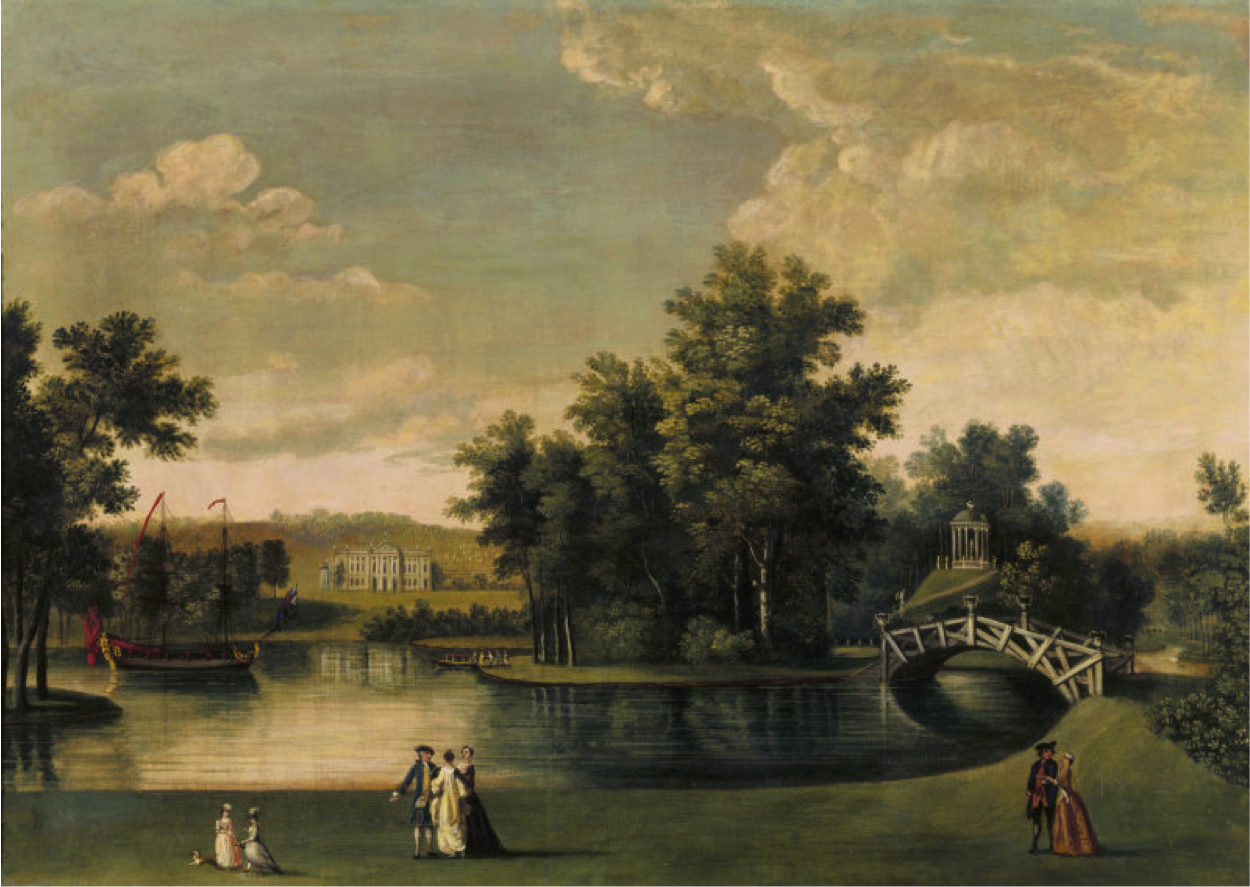
Landscape traditions survive not only in form, but in public feeling
This study argues that gardens can be read as emotional landscapes. By comparing visitor reviews across France and the United Kingdom, it shows that historic design traditions continue to resonate through the ways people describe delight, comfort, discovery, and atmosphere in contemporary public space.
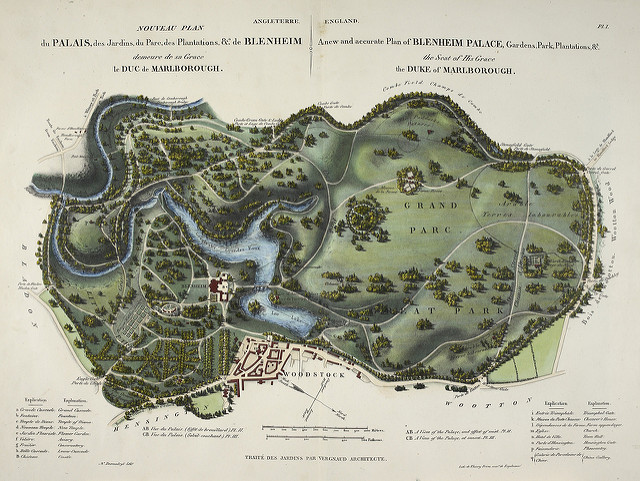
From landscape history to public feeling